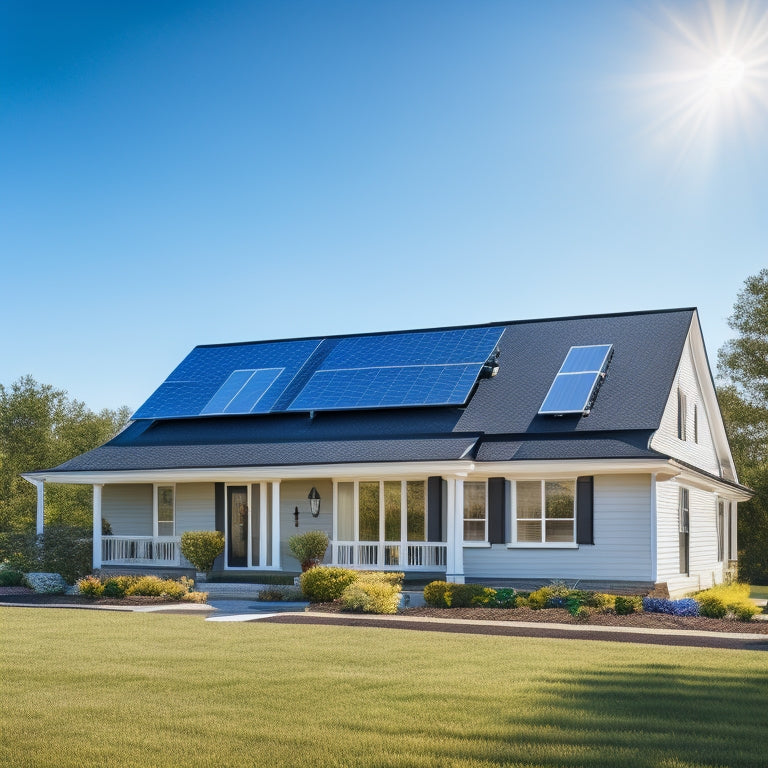
Expectations From Roof Mounted Solar Panels
When you install roof-mounted solar panels, you can expect a reduction in your energy bills, potentially saving between $400 to $1,000 annually, depending on panel efficiency, local electricity rates, and your energy usage patterns. A well-maintained system can last around 25 years, with warranties often extending to 30 years or more. With modern designs, solar panels now offer a sleek, streamlined appearance that enhances your property's curb appeal. By understanding the installation process, energy savings, maintenance costs, and durability expectations, you'll be well-equipped to make an informed decision about your investment. Now, let's explore deeper into the specifics.
Key Takeaways
- Roof-mounted solar panels can save homeowners between $400 to $1,000 annually on energy bills, depending on panel efficiency and energy usage patterns.
- The installation process involves site assessment, obtaining permits, and mounting hardware, with experienced installers helping to mitigate potential issues.
- Solar panels require routine maintenance, including inspections every six months and cleaning every 6-12 months, to maintain peak efficiency.
- With a typical lifespan of 25 years, roof-mounted solar panels are designed to withstand extreme temperatures, hail, and high winds, ensuring durability and longevity.
- Homeowners can recoup their investment within a decade, with long-term savings contributing to ROI, and potentially increase their property value with a solar installation.
Installation Process and Timeline
During the initial stages of your roof-mounted solar panel project, understanding the installation process and timeline is crucial to guarantee a seamless experience.
You'll want to familiarize yourself with the necessary permits, inspections, and labor requirements to secure a smooth installation.
The installation process typically begins with a site assessment, followed by the installation of mounting hardware, panels, and inverters.
However, installation challenges can arise due to factors such as roof complexity, weather conditions, and local regulations. These challenges can lead to timeline variability, causing delays and prolonging the project duration.
To mitigate these risks, it's important to work with an experienced installer who can anticipate and address potential issues proactively.
They'll provide you with a detailed project schedule, outlining key milestones and timelines.
Energy Savings and Efficiency
With your roof-mounted solar panel installation underway, you're likely enthusiastic to investigate the benefits it will bring to your energy consumption. One of the most significant advantages of solar energy is the potential for substantial cost savings. By utilizing sunlight to generate electricity, you'll reduce your reliance on traditional power sources, leading to lower energy bills.
The amount of energy you'll save depends on various factors, including your panel's efficiency, local electricity rates, and your energy usage patterns. However, on average, homeowners can expect to save between $400 and $1,000 per year on their energy costs. These savings can add up quickly, potentially covering the initial installation costs within a decade.
Moreover, solar energy can increase your property's value, making it more attractive to potential buyers if you decide to sell in the future.
As a result, investing in roof-mounted solar panels can provide both short-term and long-term cost benefits, making it a smart decision for those looking to reduce their energy expenses and carbon footprint.
Maintenance and Repair Costs
As you consider the benefits of roof-mounted solar panels, you'll also want to factor in the maintenance and repair costs associated with owning them.
Regular maintenance is essential to ensuring your system operates at peak efficiency, and you'll need to budget for routine inspections and potential repairs.
A thorough solar panel inspection, for instance, can help identify issues before they become major problems, saving you money and hassle in the long run.
Regular Maintenance Needs
How often do you inspect your roof-mounted solar panels to verify they're operating at peak performance? Regular maintenance is vital to guarantee optimal energy generation.
You should clean your solar panels every 6-12 months, depending on the environment and climate. Effective cleaning techniques include using deionized water, soft-bristled brushes, and mild soap solutions. Avoid using abrasive materials or harsh chemicals, which can damage the panels.
Seasonal adjustments are also necessary to maximize energy output. During summer, confirm the panels are tilted at an ideal angle to capture the sun's rays.
In winter, adjust the tilt to compensate for the lower sun angle. Additionally, inspect the panels for debris, such as leaves or branches, which can obstruct energy generation.
Solar Panel Inspection
Every six months, you should inspect your roof-mounted solar panels to identify potential issues that could be hindering their performance. This regular checkup helps you stay on top of maintenance needs, guaranteeing peak energy output and extending the lifespan of your solar panel technology.
During the inspection, look for signs of wear and tear, such as loose connections, damaged panels, or debris accumulation. Check for any corrosion or rust on the mounting system and confirm that all components are securely fastened.
Verify that the panels are still aligned correctly and that there are no obstructions blocking sunlight. Familiarize yourself with local solar panel regulations and guidelines to guarantee compliance.
Keep records of your inspections and maintenance activities, as this documentation may be required for future repairs or warranty claims. By performing regular inspections, you can identify and address potential issues promptly, minimizing downtime and maximizing your return on investment in solar power.
Aesthetic Appeal and Design
You'll find that modern roof mounted solar panels boast sleek designs that enhance your home's curb appeal.
These systems can be seamlessly integrated into your existing roofline, minimizing visual impact.
With a range of options available, you can choose a design that complements your home's structure and style.
Sleek Modern Designs
Sleek, modern roof-mounted solar panels boast a streamlined appearance that complements contemporary design. You'll appreciate the innovative materials used to create these panels, which not only enhance their aesthetic appeal but also improve their efficiency.
For instance, some panels feature a sleek, frameless design that allows them to blend seamlessly into your roofline. Others incorporate eco-friendly options, such as recyclable materials, to minimize their environmental impact.
As you examine your options, you'll notice that many modern solar panels have a more compact, streamlined profile than their predecessors. This is due in part to advancements in technology, which have enabled manufacturers to pack more power into smaller, more efficient panels.
The result is a sleek, modern look that complements a wide range of design styles. Whether you're looking to upgrade your existing home or build a new one, modern roof-mounted solar panels offer a stylish, eco-friendly solution that's both functional and visually appealing.
Seamless Integration Options
Many modern roof-mounted solar panels offer seamless integration options, allowing them to blend in with your roof's design and structural design. This means you can utilize the power of the sun without compromising your home's aesthetic appeal.
You'll find that many solar panels are designed to resemble traditional roofing materials, making them nearly indistinguishable from the rest of your roof. This sleek, modern approach guarantees that your solar panels complement your home's design, rather than detract from it.
Moreover, seamless integration options can also increase your roof's functionality. For instance, some solar panels can be installed as a replacement for traditional roofing materials, providing both energy generation and weatherproofing.
This can be especially beneficial for homeowners who are looking to upgrade their roof while also reducing their carbon footprint. Plus, with government incentives and financing options available, making the switch to solar has never been more accessible.
Durability and Lifespan Expectations
About 25 years is the typical lifespan of a roof-mounted solar panel system, with some manufacturers guaranteeing their products to last up to 30 years or more.
You can expect your solar panels to withstand various weather conditions, including extreme temperatures, hail, and high winds. Weather resistance is a critical factor in determining the lifespan of your solar panels, and reputable manufacturers design their products to withstand the elements.
You'll want to look for solar panels with high-quality materials that guarantee material longevity. The anodized aluminum frames, tempered glass, and durable encapsulants all contribute to the overall durability of your solar panel system.
Additionally, the mounting system and racking components should be designed to withstand environmental stresses and support the weight of the panels. By choosing a high-quality solar panel system, you can guarantee a long and trouble-free operation, maximizing your energy production and savings over the system's lifespan.
Return on Investment Analysis
Frequently, homeowners who invest in roof-mounted solar panels wonder when they can expect to break even on their investment. A return on investment (ROI) analysis helps you determine how long it takes to recoup your investment. The ROI calculation considers the upfront cost of the solar panel system, the total electricity savings, and any financing options or incentives you may have employed.
You can expect a higher ROI if you've taken advantage of tax incentives, such as the Solar Investment Tax Credit (ITC). This credit allows you to claim a percentage of the total cost of your solar panel system as a tax credit. Additionally, you may have benefited from state or local incentives, such as rebates or property tax exemptions.
When calculating your ROI, consider the total electricity savings over the system's lifespan. With roof-mounted solar panels, you can expect to save between $400 and $1,000 per year on your electricity bills, depending on your energy usage and local electricity rates.
Frequently Asked Questions
Can I Install Solar Panels on a Metal or Asphalt Shingle Roof?
As you commence on a sunny adventure, you'll be pleased to know you can install solar panels on both metal and asphalt shingle roofs, although the installation process varies depending on the roof type, with metal roofs requiring specialized clamps.
Do Solar Panels Void My Roof's Warranty or Insurance?
When you install solar panels, you'll need to review your roof's warranty and insurance to guarantee they won't be voided; some manufacturers offer solar panel warranties that address roof maintenance concerns, so you'll want to investigate those options carefully.
Can I Add Solar Panels to an Existing Solar Panel System?
You're not locked into your initial solar setup; you can expand your system by adding more panels, but verify compatibility by checking your existing system's specifications and inverter capacity before integrating new solar panels for seamless system expansion.
Will Solar Panels Affect My Roof's Structural Integrity?
You'll need to assess your roof's load capacity before installing solar panels, guaranteeing it can handle the added weight; regular roof maintenance will also be essential to prevent damage and secure ideal energy generation.
Can I Install Solar Panels on a Flat or Commercial Roof?
As you stand on the rooftop, envisioning a sea of solar panels, you wonder: can you utilize the power on a flat or commercial roof? Yes, you can, leveraging flat roof benefits like increased space and commercial roof considerations like built-up roofing systems.
Related Posts
-

What You Need to Know About RV Solar Maintenance
When you're out on the road, your RV's solar panel system is your lifeline. But without regular maintenance, you're l...
-

What Are the Average Cost Savings of Solar Panels
You can expect to save between $400 and $1,000 per year on your electricity bills with solar panels, which translates...
-
Reduce Solar Panel Cost for Your Small Home
By evaluating your energy needs, choosing the right installer, and selecting cost-effective solar panel options, you ...
